Wednesday, September 25, 2013

The system overhaul

I often wonder, why I still remember some of my nursery rhymes but not the teachers who taught them. Perhaps, the rhymes are so deeply entrenched in my system that forgetting them is out of question. Also, I must confess the delivery of those rhymes in my early formative years was innately creative to keep me engrossed. Remembering a particular teacher has a lot to do with remembering things associated with him or her.

One barely remembers 100 per cent of what one was taught in school. And of all that one remembers, pedagogy and teaching methods have a significant role in effective recall.

Recently, a report about teacher education in Scotland laid emphasis on grooming teachers for future. The findings from international research on teaching and educational leadership highlighted a number of key features of good teachers. It demands teachers to be reflective, creative, committed to profession and development of each child, passionate about learning, enthusiastic about their subject and keen on participating in their own personal learning and development. Click here to Read more IIPM article at IIPM


Like us and read IIPM Think-Tank articles on facebook

Finding your way to light

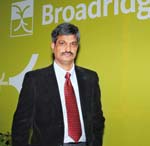
Laxmikanth Venkatraman has been a part of the IT industry since 1982. His experience spans software product development and support, marketing of IT products and services, business process outsourcing, human resources and systems administration. His expertise lies in development of offshore delivery models and he has been instrumental in setting up offshore delivery centres for MNCs like Intergraph Corporation, D. E. Shaw & Co., ADP and Broadridge. Mr. Venkatraman is a member of the Chartered Securities Investment Institute’s India committee; chairman, AMCHAM Hyderabad chapter; and a member of the advisory board of the ICFAI.

Q. From physics to management, how did it all come along? Also, what was your career idea when you were in school?
A. I really never had any career idea or goal as such. I have always been an avid cricket fan and used to spend my time playing the game. After completing my post graduation, my father suggested that I do a course in computers, as it was the ‘in thing’ then. Eventually I became a trainer in a computer coaching centre. This is how the journey started that brought me where I am today.

Q. Please throw some light on your journey to becoming the MD of Broadridge Financial Solutions India Pvt. Ltd.
A. In many ways, I would say my journey was probably one of the earliest in software industry in India and pioneering in the ecosystem around it. When I look back, I can see that there were a lot of things that we introduced in those days which are still prevalent. For example, knowledge management, innovative HR practices were some of the practices which we introduced in our organisation, and associates wholeheartedly accepted them. These ultimately translated into becoming the best practices of the organisation. All this was possible may be because we were young, enthusiastic and wanted to do a lot of new things. Click here to read more...

Like us and read IIPM Think-Tank articles on facebook

Wednesday, July 31, 2013

United Kingdom: PAST AND PRESENT

Trade union density has fallen markedly in the UK since its peak at 56.3 per cent in 1980. Despite occasional small rises in membership since 1997, statistics over the past decade would suggest that union density has reached one of its lowest levels at just under 30 per cent. A large difference in trade union density rates is evident between the private and public sectors. As of 2008, trade union density in the private sector was 16.1 per cent, while it reached 59 per cent in the public sector.

Trade unions in Britain are organised both horizontally and vertically. The sole trade union confederation in the UK is the TUC. There are 6,471,030 members in TUC affiliated unions, down from 12,172,508 members in 1980. However, the TUC does not conclude or has the power to conclude collective agreements at any level. In response to declining membership figures, UK trade unions have engaged in many mergers in recent years. In 2008, there were 167 trade unions in the UK – down from 238 unions in 1998 and 326 in 1988. In 2007, the UK Trade Unions Amicus and the Transport and General Workers’ Union (TGWU) merged to form Unite the Union (Unite). This is the UK’s largest union, with a membership of about 1,900,000 workers. The largest public sector trade union is Unison, which has a membership of 1,344,000 persons and organises workers in all areas of the public sector. Click here to read more...

Like us and read IIPM Think-Tank articles on facebook
IIPM Think-Tank
Business and Economy
The Sunday Indian
Prof. Arindam Chaudhuri
Prof. Rajita Chaudhuri
4ps Business and Marketing
The Human Factor

Saturday, July 20, 2013

The burning question

The problems with India’s higher education sector are well-known – poor leadership and management, inadequate investment and infrastructure, poor utilisation of resources, and inadequately trained and rewarded faculty. There are definitely some successes, most prominently the IIMs and a few other top institutions, which have deserved reputations for their high quality graduates. But this success reflects the shortage of options for students, which creates extreme competition for admission to top institutions. The high quality of the small cohort of graduates from these top institutions and the gap in quality of graduates from the mainstream of institutions reflects the broader failure of the educational system in India. The success of the few at the top and the failure of the system to provide for the rest is an indication of defeat and a cause for concern rather than celebration.

I believe that the responsibility for this poor state of affairs is also clear – the fault lies largely with the government, which includes federal state and state governments. Even allowing for resources limitations, the government’s mismanagement is the underlying reason for poor state of education in India.

The government’s poor record in education over the decades suggests that solutions should be sought elsewhere. Unfortunately, the nature of education is such that government involvement is essential. For India, the government has a critical role to play in correcting the current state and in creating conditions necessary for a truly effective education system to emerge. This does not require the government to directly provide higher education or to manage its institutions. Instead, it should create governance and physical infrastructure, and provide financial and HR support where most needed. Click here to read more...

Read More IIPM Related Articles
Zee Business Best B-School Survey 2012
Prof. Arindam Chaudhuri's Session at IMA Indore
IIPM IN FINANCIAL TIMES, UK. FEATURE OF THE WEEK
IIPM strong hold on Placement : 10000 Students Placed in last 5 year
IIPM's Management Consulting Arm-Planman Consulting
Professor Arindam Chaudhuri - A Man For The Society....
IIPM: Indian Institute of Planning and Management
IIPM makes business education truly global
Management Guru Arindam Chaudhuri
Rajita Chaudhuri-The New Age Woman
IIPM B-School Facebook Page
IIPM Global Exposure
IIPM Best B School India
IIPM B-School Detail
IIPM Links
IIPM : The B-School with a Human Face

Thursday, February 28, 2013

Privatisation spurs competition

Q. What are some of the most effective teaching practices you have come across in your career? Please share a cross-national perspective.
A. Two practices have proven highly successful – extending school time upto six days a week and tutoring after school. Countries in East Asia have most or all of these features and generally score highest in international comparisons of achievement. Another advantage in East Asia is that there exists a supportive environment at home along with stimulating parental practices.

Q. What are the major educational reforms introduced by the American government in recent times to raise the standards of learning and teaching?
A. The American government over the past half century has been largely unsuccessful in raising achievement of school children despite being one of the biggest spenders on per student schooling. However, the country has been successful in promoting privatisation, for example, the voucher system that enables children to go to private schools. Click here to read full interview...

Read More IIPM Related Articles
Zee Business Best B-School Survey 2012
Prof. Arindam Chaudhuri's Session at IMA Indore
IIPM IN FINANCIAL TIMES, UK. FEATURE OF THE WEEK
IIPM strong hold on Placement : 10000 Students Placed in last 5 year
IIPM's Management Consulting Arm-Planman Consulting
Professor Arindam Chaudhuri - A Man For The Society....
IIPM: Indian Institute of Planning and Management
IIPM makes business education truly global
Management Guru Arindam Chaudhuri
Rajita Chaudhuri-The New Age Woman
IIPM B-School Facebook Page
IIPM Global Exposure
IIPM Best B School India
IIPM B-School Detail
IIPM Links
IIPM : The B-School with a Human Face

Monday, January 14, 2013

We have a decentralised system of education in the United States.

Q. What are the key motivating factors that draw people towards teaching? How do you assess a teacher’s performance?
A. The fiscal crisis has led to unprecedented cuts in the number of teachers. Young people can see what is happening and they decide to opt for other professions. The amount of money coming from the states to support the public higher education institutions has also been declining rapidly in recent years. As the budgets have gotten tighter, the states have started to put more money in the schools than in their higher education institutions.

Students have been paying more and receiving less from their professors. The increased revenue for the higher education institutions has not been used to improve instruction. The number of days devoted to instruction has declined and the institutions have been cutting down on the proportion of the faculty. Until about 20 years ago, careers in the high status professions were not open to women in the United States. American women with college degrees could choose between nursing, secretarial work and school teaching. Today, careers have opened up to college-educated woman across the whole spectrum of high status professions. Click here to read read full interview..

Read More IIPM Related Articles
Zee Business Best B-School Survey 2012
Prof. Arindam Chaudhuri's Session at IMA Indore
IIPM IN FINANCIAL TIMES, UK. FEATURE OF THE WEEK
IIPM strong hold on Placement : 10000 Students Placed in last 5 year
IIPM's Management Consulting Arm-Planman Consulting
Professor Arindam Chaudhuri - A Man For The Society....
IIPM: Indian Institute of Planning and Management
IIPM makes business education truly global
Management Guru Arindam Chaudhuri
Rajita Chaudhuri-The New Age Woman
IIPM B-School Facebook Page
IIPM Global Exposure
IIPM Best B School India
IIPM B-School Detail
IIPM Links
IIPM : The B-School with a Human Face

Saturday, January 12, 2013

Stress management at workplace

This case study is a peculiar example of organisational psychopharmacology, a science dealing with the stress management of employees. Rajul was efficient in his job and was close to the top management. As a senior he was also answerable to the management. He was being paid well, yet he did not have job satisfaction as he thought the work was monotonous and probably he did not find growth opportunities. Functional tension is a must in employees in order to make them work at optimal level of efficacy and effectiveness. However, dysfunctional tension causes an employee burn out in the long run. The following reasons can be identified for Rajul’s dysfunctional tension:-

Personal reasons: A popular concept in management is, “One should pick up a job which one likes or pick up any job and develop liking for it.” Rajul had been, by and large, doing well as marketing manager. But still, he saw no career development opportunity in GT. He carries this tension home and fights with his wife and shouts at his children. Happiness is a decision and not a dependency. Perhaps Rajul has to learn to be happy and like his job.

Organisational reasons: The chairman, Goldy, being a short tempered lady made Rajul tense while asking for last year’s annual financial report. Remaining cool and not offending the employees is essential for effective functioning of an organisation. Also in weekly conference, when Kaushal and Rajul had heated arguments, Gaurav should have intervened to remove their misunderstanding. Should any organisation recruit employees on recommendations of senior managers, without checking their suitability? Top management of GT has indulged in favouritism by allowing Rajul to be closer to them, which seems to have created professional jealousy. Click here to read more..

Read More IIPM Related Articles
Zee Business Best B-School Survey 2012
Prof. Arindam Chaudhuri's Session at IMA Indore
IIPM IN FINANCIAL TIMES, UK. FEATURE OF THE WEEK
IIPM strong hold on Placement : 10000 Students Placed in last 5 year
IIPM's Management Consulting Arm-Planman Consulting
Professor Arindam Chaudhuri - A Man For The Society....
IIPM: Indian Institute of Planning and Management
IIPM makes business education truly global
Management Guru Arindam Chaudhuri
Rajita Chaudhuri-The New Age Woman
IIPM B-School Facebook Page
IIPM Global Exposure
IIPM Best B School India
IIPM B-School Detail
IIPM Links
IIPM : The B-School with a Human Face

Monday, December 10, 2012

The CSR activities that India needs the most are in the areas of education and health care.

Q- I have done BSc in botany. I love interacting with people and understanding their perspective. Is it a prerequisite to obtain a degree in HR to venture into the industry?
A. Traditionally, it was not a prerequisite but nowadays industry requirements have changed. An HR professional today develops an overall understanding of the industry and is prepared to take up any role. An MBA in HR or doing PGDM (HR) from any reputed institute will not only give you ample exposure to the industry but will also help in finding the appropriate platform to start your career. It is good that you are good with people but learning to manage them is something you need to do.

Q- What can be the best HR practices to achieve organisational goals every year?
A. The role of HR management is evolving with the emergence of new technologies and growth of the global marketplace. It is time for companies to recognise the value of talented and informed HR department.

One of the most important HR practices is delighting employees with the unexpected!

Benefits, compensation, and work-life balance are the most important factors in providing overall job satisfaction. These factors further ensure that employees who stay longer are more productive and earnest. Employee recognition is another important factor that helps a company achieve its desired goals, as it is the talent that ensures the overall growth of any business. Spot awards, annual achievement awards, outstanding performance award, best employee award, could be some of the other initiatives as part of best HR practices. Click here to read more interviews..

Read More IIPM Related Articles
Zee Business Best B-School Survey 2012
Prof. Arindam Chaudhuri's Session at IMA Indore
IIPM IN FINANCIAL TIMES, UK. FEATURE OF THE WEEK
IIPM strong hold on Placement : 10000 Students Placed in last 5 year
IIPM's Management Consulting Arm-Planman Consulting
Professor Arindam Chaudhuri - A Man For The Society....
IIPM: Indian Institute of Planning and Management
IIPM makes business education truly global
Management Guru Arindam Chaudhuri
Rajita Chaudhuri-The New Age Woman
IIPM B-School Facebook Page
IIPM Global Exposure
IIPM Best B School India
IIPM B-School Detail
IIPM Links
IIPM : The B-School with a Human Face

Monday, December 03, 2012

The first obvious thing which surfaces when a company is in trouble is replacement of the CEO

The Yahoo! example fits perfectly in this regard as Bostock, along with three of the directors, is near the exit door after failing to lift the company even after replacing the CEO in a tumultuous time.

During a crisis situation, it is not enough to have just one backup plan. In the current economic scenario, it is necessary to plan for the worse.

Sometimes, board members are too confident and have a notion that there are many within the house capable enough to get in the shoes of the outgoing CEO. How many of the potential candidates can adapt to the role perfectly is something to figure out.

“Boards do get careless because they are under a lot of pressure to replace the person, or they might be looking for qualities like charisma that are irrelevant,” says Hambrick. At times, the consensus on a person’s name deemed fit for the role (due to a particular quality) can be a misfit, considering the need for altogether different skill sets.

Nowadays, researchers are advising board members to analyse on the basis of market trends their decision of substituting the top executive and to decide whether the new person is the right one for the job on similar lines. However, when a company fires its CEO who has started to become a liability considering overall conditions at hand, and brings in someone who they believe can turn things around, then performance might improve substantially. Read more...

Read More IIPM Related Articles
Zee Business Best B-School Survey 2012
Prof. Arindam Chaudhuri's Session at IMA Indore
IIPM IN FINANCIAL TIMES, UK. FEATURE OF THE WEEK
IIPM strong hold on Placement : 10000 Students Placed in last 5 year
IIPM's Management Consulting Arm-Planman Consulting
Professor Arindam Chaudhuri - A Man For The Society....
IIPM: Indian Institute of Planning and Management
IIPM makes business education truly global
Management Guru Arindam Chaudhuri
Rajita Chaudhuri-The New Age Woman
IIPM B-School Facebook Page
IIPM Global Exposure
IIPM Best B School India
IIPM B-School Detail
IIPM Links
IIPM : The B-School with a Human Face

Monday, November 26, 2012

No company is immune to internal hard times — stagnation or declining performance. How can HR pave a way forward when the organisation runs into a wall? Prof. Manas Ranjan Tripathy of IBS, Hyderabad, reveals.

The HR function is often viewed as alien to the organisation’s strategic plan, though there is a feeling of unanimity of its larger role in executing strategies. The role of HR during a turnaround is not definitive in context and application. The major role played by the HR team is that of a coach to the intervention team, facilitator to the employees in adapting change and bulwark for the leadership, devising an exit strategy once the objectives are realised.

Thought leaders DiFilippo and Waldt stressed HR professionals need to be visible to all the employees during difficult times. Although they are merely the messengers, HR staff members often bear the brunt of the blame for reductions in force. But the worst thing they can do is to stay hidden in their offices or walk around looking sombre. Instead they must demonstrate that they are available for questions, are responsive to people’s needs and are continuing to do their jobs in an optimistic way. Another reason to be walking the halls is to listen for rumours and to put an end to them before they go too far. The other important aspect HR may take care of is that of delivering strong messages to the fence sitters as satisfactory underperformance. How a company handles a turnaround can make all the difference when it comes to the business moving forward productively as per the devised strategy of turnaround. The biggest concern for the HR team during this difficult time is to overcome challenges such as talent flight or poaching of talent by opportunistic headhunters and rival companies. Recruiting new talents with the right skill sets for turnaround option is another major challenge for the HR team.

The focus of HR should be to attract the talents who are willing to take risk and script success stories in the form of intrinsic rewards. Read more...

Thursday, November 22, 2012

Accessibility, empowerment and an inspiring vision are what HR wishes from a CEO.

Q. What are the key strategic areas where involvement of HR becomes mandatory? How can a CEO help in making HR practices more effective?
A. An organisation primarily consists of the people working in it. HR is all about human relations and how an organisation can develop this relationship. Culture and ethos are what takes an organisation to the next level. Senior management must develop a culture where people love to come back every day. It is the CEO’s job to create an environment where employees give their 100 per cent.

As the focus of the 21st century is on the happiness quotient rather than only on profits and deliverables, the CEO and HR must engage employees in various activities like taking them out or conducting stress management classes to keep them happy.

Q. What is HR’s value proposition to the CEO?
A. If you value the employees, they will value the organisation. An employee who has high regard for the organisation will remain in the company and serve with 100 per cent sincerity and dedication. But such talent can be retained only when they really feel the senior management is taking good care of them. I believe the best way to take care of an employee is by adding value to his profession and giving him the right kind of exposure through knowledge intervention. Read more...


Read More IIPM Related Articles
Zee Business Best B-School Survey 2012
Prof. Arindam Chaudhuri's Session at IMA Indore
IIPM IN FINANCIAL TIMES, UK. FEATURE OF THE WEEK
IIPM strong hold on Placement : 10000 Students Placed in last 5 year
IIPM's Management Consulting Arm-Planman Consulting
Professor Arindam Chaudhuri - A Man For The Society....
IIPM: Indian Institute of Planning and Management
IIPM makes business education truly global
Management Guru Arindam Chaudhuri
Rajita Chaudhuri-The New Age Woman
IIPM B-School Facebook Page
IIPM Global Exposure
IIPM Best B School India
IIPM B-School Detail
IIPM Links
IIPM : The B-School with a Human Face

Thursday, November 01, 2012

Turning Strategic Intent into Real Results

Q. Can a CEO put HR on frontline of the business?
A. Where the executive has the capability and experience to do so this would be quite possible. With strong leadership skills and a good understanding of what drives the business an executive can leverage the talents and abilities of the people they lead. I have seen HR managers placed in such roles to broaden their experience and perspectives who have done an outstanding job, leading them to more strategic roles as a result. There are HR executives who have become successful CEOs and Ann Sherry, CEO Carnival Australia, is one such example.

Q. According to you, what steps is the HR taking to meet CEO’s expectations and business’ real- time needs?
A. Every area of contribution of HR can become a significant contribution. Some examples are:
Management of turnover issues reducing the cost, creating positive retention, enhancing the talent pool and the effectiveness of performance. Transforming the leadership culture to lead new initiatives.
• Employee relations and development programmes to engage them in changing their skills to be able to move in direction of the organisation.
• CSR programmes that are integral to developing a sound direction for the organisation and the society.
• Programmes that enhance quality of working life and increase levels of engagement and retention.
• Evaluation of culture for M&As and transformation programmes to prevent failure from untested assumptions.
• Succession planning initiatives to have a strong pool of candidates leading to natural progressive transitions of leaders. Click here to read full interview...

Read More IIPM Related Articles
Zee Business Best B-School Survey 2012
Prof. Arindam Chaudhuri's Session at IMA Indore
IIPM IN FINANCIAL TIMES, UK. FEATURE OF THE WEEK
IIPM strong hold on Placement : 10000 Students Placed in last 5 year
IIPM's Management Consulting Arm-Planman Consulting
Professor Arindam Chaudhuri - A Man For The Society....
IIPM: Indian Institute of Planning and Management
IIPM makes business education truly global
Management Guru Arindam Chaudhuri
Rajita Chaudhuri-The New Age Woman
IIPM B-School Facebook Page
IIPM Global Exposure
IIPM Best B School India
IIPM B-School Detail
IIPM Links
IIPM : The B-School with a Human Face

Thursday, October 25, 2012

Valerie Rozycki (Founder and CEO, Zipdial) shares, in a Conversation with Abhishek Chanda, her Penchant for start-ups, The Journey Leading to Zipdial and how Trai Regulations Prove to be a boon for her Company while Others Bleed

So, what sparked the entrepreneur in her? “I knew from inside that I’m a start-up person. While studying, I took a class on entrepreneurship, where the goal was to write a business plan for a hi-tech start-up within 10 weeks. Though I did not do very well in terms of grades, it was an eye-opener for me,” she recalls. For Valerie, risks in a new venture never really mattered much. According to her, what is important is the whole idea of starting something new where one can put his/her 100 per cent, rather than searching for something steady and secure. “While starting off, I never really looked back thinking about money. So, when I moved to India, I had to take a pay cut, given that I was now earning in rupees and also at that time the slowdown had hit various economies,” she chuckles.

Zipdial, which offers services like Lead Generation, Voting, Ratings and Surveys, Branding Campaigns, Loyalty and Coupons and Authentication and Mobile Payments, was set up keeping in mind market drivers like, massive growth in the mobile market, a growing demand for simplicity, rising incomes and the most important factor - masses do not use or are not that enthusiastic about SMSes, let alone 3G, when compared to dialing.

So, here is how it works. Lets assume that somebody wants to know the latest IPL scores. The person then dials or Zipdials a number, which rings and disconnects automatically and in comes a SMS with the latest scores. For IPL as a client for Zipdial, they need to pay a fee for the services and later simply mention the Zipdial number in their promotions or advertisement. As soon as the consumer calls, its a call-to-action for the brand. Likewise, there are dedicated numbers for various verticals, may it be cricket or business promotions or an event. For the mass consumer, the numbers are toll free and can be accessed by anyone, anywhere, on any handset or network. A patent pending solution, Zipdial has been the only player in the world for over the last 14 months or so since they launched, claims Valerie, but off late a few similar modules have mushroomed. Click here to read more....

Read More IIPM Related Articles
Zee Business Best B-School Survey 2012
Prof. Arindam Chaudhuri's Session at IMA Indore
IIPM IN FINANCIAL TIMES, UK. FEATURE OF THE WEEK
IIPM strong hold on Placement : 10000 Students Placed in last 5 year
IIPM's Management Consulting Arm-Planman Consulting
Professor Arindam Chaudhuri - A Man For The Society....
IIPM: Indian Institute of Planning and Management
IIPM makes business education truly global
Management Guru Arindam Chaudhuri
Rajita Chaudhuri-The New Age Woman
IIPM B-School Facebook Page
IIPM Global Exposure
IIPM Best B School India
IIPM B-School Detail
IIPM Links
IIPM : The B-School with a Human Face

Wednesday, October 17, 2012

Encouraging The Devil’s Advocate

The challenge facing executive teams in ensuring that sound decisions are made is simple: groupthink. Psychologist Irving Janis, who researched the subject extensively, defined groupthink as the systematic errors made by groups when taking collective decisions.

The three layers of groupthink

1. Key causes: Include group cohesion, directive leadership and ideological homogeneity.

2. Common symptomatic behaviours: Include overestimation of the capabilities of the group, being closed-minded and pressure for uniformity.

3. Consequent decision-making flaws: Include inadequate contingency planning, insufficient information and biased assessments of risk, cost-benefits and moral implications.

Research has shown it is natural for teams (whatever their motivations and guidelines) to suppress dissent or information flow; have extreme attitudes; make extreme judgments; be less flexible in adapting their approach to changing circumstances, but – despite all this – have greater confidence in their decisions. Groups also tend to focus discussion on things they already agree about rather than things they disagree about, leading individuals to publicly endorse decisions viewed as normal for the group, despite privately holding reservations. Click here to read more..

Read More IIPM Related Articles
Zee Business Best B-School Survey 2012
Prof. Arindam Chaudhuri's Session at IMA Indore
IIPM IN FINANCIAL TIMES, UK. FEATURE OF THE WEEK
IIPM strong hold on Placement : 10000 Students Placed in last 5 year
IIPM's Management Consulting Arm-Planman Consulting
Professor Arindam Chaudhuri - A Man For The Society....
IIPM: Indian Institute of Planning and Management
IIPM makes business education truly global
Management Guru Arindam Chaudhuri
Rajita Chaudhuri-The New Age Woman
IIPM B-School Facebook Page
IIPM Global Exposure
IIPM Best B School India
IIPM B-School Detail
IIPM Links
IIPM : The B-School with a Human Face

Friday, October 12, 2012

B. Muthuraman (Vice Chairman, Tata Steel)

Continued...In a young country like India, he applies Charles Darwin’s theory of survival of the fittest in his appreciation of today’s youth. He finds them to be “better gifted” than their ancestors, owing to greater access to technology which has allowed them exposure to an array of information. On the flipside, he admits that they are perhaps less appreciative of the importance of human relations and the human touch in their dealings with and understanding of people. Even so, he firmly believes that the youth will play a large part in India’s growth story, as he lists the three most essential factors, “First is the need for India to bring in social equality; with such a large population you cannot afford to have growth only in pockets. Second, while we continue to create great engineers, research scholars, etc., we must also ensure that basic skills are given to all for unemployement to be curtailed.” The final factor, he says, is the need for transcparency in the government, in light of the scams and cases of corruption we have witnessed. On the personal front, Mr. Muthuraman confesses that he is not too good at his work-life balance. He credits his wife, “She is an extraordinary person; the perfect homemaker. She manages life for both of us.” A heartwarming thought indeed, coming from the respected business leader. Click here to continue...

Read More IIPM Related Articles
Zee Business Best B-School Survey 2012
Prof. Arindam Chaudhuri's Session at IMA Indore
IIPM IN FINANCIAL TIMES, UK. FEATURE OF THE WEEK
IIPM strong hold on Placement : 10000 Students Placed in last 5 year
IIPM's Management Consulting Arm-Planman Consulting
Professor Arindam Chaudhuri - A Man For The Society....
IIPM: Indian Institute of Planning and Management
IIPM makes business education truly global
Management Guru Arindam Chaudhuri
Rajita Chaudhuri-The New Age Woman
IIPM B-School Facebook Page
IIPM Global Exposure
IIPM Best B School India
IIPM B-School Detail
IIPM Links
IIPM : The B-School with a Human Face

Wednesday, October 10, 2012

Kenneth Moore points out that Doughnuts, Coffee and Soda do Contribute to a Good Meeting, besides just having Well-Prepared Participants!

Continued...First, once you have decided that there is no alternative but to hold a meeting, then you must be crystal clear on its objective. Write down on a piece of paper what you want to discuss and what you hope to achieve from the discussion. Ask yourself two basic questions: what is it that I hope to achieve with this meeting, and what would be the consequence of not holding this meeting. More than a few of the managers in my seminars have indicated that the weekly manager’s meeting or the division head’s meetings are the most frequently abused time wasters. They usually exist out of habit or tradition and often fail to justify their existence. Because they occur every week, the participants settle into the same routine with little thought as to the content or conduct of the meeting.

Second, prepare a logical sequence of items to discuss, and place a time limit on each. This sequence is usually called an agenda, but you must be careful that it does not become just a crib sheet for the chairman. It is a detailed brief from which all others work. It will define the subject area, the amount of time allowed for the discussion, and the objective. It can also list the major topics in the subject area relevant to the objective. Keep in mind that the amount of time spent on a subject should be determined by its importance, not its urgency.

Third, invite only those who can contribute to the objectives of the discussion. Let them know as far in advance as possible what is being discussed, why it is being discussed, and what you hope to achieve. As chairman of the meeting, you must anticipate the needs of the participants as well as their own time constraints and ensure that they are met. You must also inform the people what they are expected to contribute. Read More..

Monday, October 08, 2012

MNCS: INDUSTRIAL ACCIDENTS, POLLUTION, AND MONEY POWER

MNCs are hailed as national treasures in some countries; but their devil-may-care attitude results in many tragedies – both industrial and health – making them reasons for global shame

Bhd. at Sungai Buloh, Malaysia in 1991, causing 22 deaths and injuring 103, Bright Sparkles remained lukewarm in helping victims and their families and compensating the environmental damages it has caused. The lethal leak of phosgene gas in a Thai petrochemical company, Thai Polycarbonate Co., which killed only one but injured over hundreds, evoked almost no unified response, despite shocking proof being there of repeated calls earlier on warning of a possible leak. And the fiery explosion at one of the largest oil refineries of British Petroleum in Texas City in 2005, is another example of such unabashed irresponsibility. Well, BP has had a sparkling record of fatal accidents for the last few decades. Honourably so, it is the eighth largest polluter in the US, releasing over 5.1 million tonnes of pollutants with many harmful toxic gases like carcinogens, causing serious health ill-effects to 30,000 people living within three mile radius of its units. But while FBI investigation and imposition of new laws and fines continues, BP operates mercifully at worse levels.

On another front, Nigeria has redefined corporate social irresponsibility. Companies like Shell, ExxonMobil and Chevron are reaping off the nation’s oil industry but continue showing deliberate negligence to protecting the environment, human life and the locality which have been affected by the gas leakage and flares in their plants or refineries.

Protocols like the Kyoto one are more stupidly chivalrous rather than being autocratically (and logically) regulatory. International agencies have to necessarily regulate MNCs with an iron hand, than play to the lobby gallery.


Source : IIPM Editorial, 2012.

For More IIPM Info, Visit below mentioned IIPM articles.

 
IIPM : The B-School with a Human Face

Saturday, October 06, 2012

The Reasons for Choosing India as the Launchpad

Philip Mckinney, VP & CTO, Personal Systems Group, HP Reveals to Neha Saraiya the Reasons for Choosing India as the Launchpad for HP’s Latest Offering – HP Dreamscreen and its Future Roadmap

B&E: As you mentioned that there will be an explosion of products in the future, which is that one particular area where HP is planning to bet big in terms of technological advancement?
PM:
I think the tablet space is really interesting. It’s set for some real movement in the next 9 months. You are bound to see a flood of tablets ranging from 6 to 12 inches over this period. In fact, in a study that we did with health care providers, we found them really interested in 7 inch tablets as they fit into the doctors’ lab coats. In the US, you can presently see retailers distributing tablets to their sales staff to place and collect orders on time.

B&E: Any other area that may see similar growth?
PM:
3D is the next most potential area, though it may take some time to catch up. But we are already into it with the ENVY 17 laptops that is 3D enabled, though it’s still under experimentation and there is very little content. At HP lab, we are continuously working on it as we are looking at variety of 3D products in future. However, in this segment, we believe that the demand will come more from businesses rather than retail consumers. For example, think of 3D in movies like Avatar. We are behind all the technology provided for these 3D movies. Taking it a step forward, we are now working with other industries like health care, banking and oil and gas.

B&E: You have recently launched the ‘DreamScreen’ in India. But, why did you choose India as the market to launch it first?
PM:
First, we have a substantial team at Bangalore and second, we also have a design centre in Delhi. The centre in Delhi actually helps in bringing the pieces from HP technology and then redesigning the same in India as per the requirements of the Indian market. So, we already had resources here, thus, we decided to take advantage of the same. However, the real challenge that we faced was that the products developed here were a lot different from what we created in the other parts of the world. To overcome the problem, we actually built a chart that showed the Internet penetration for thousand homes along with a circle that represented the whole population. We did a comparative study with the developed markets like US, UK and Japan on one side and developing markets like India, China and Brazil on the other side. What we found out was that while India has the largest circles, rate of penetration is very low. Thus, we realised that although the companies are trying to reach to the mass, the consumers are not getting the benefits. But for me, the most important thing was to use the technology in a manner that it can have a fundamental impact on people’s lives. That’s why we needed to build products that are relevant to the market. And for this, what could have been a better option than India where we already have so much of resources.


Source : IIPM Editorial, 2012.

For More IIPM Info, Visit below mentioned IIPM articles.

 
IIPM : The B-School with a Human Face
Friday, October 05, 2012

CLOUD COMPUTING: FLIP SIDE

Cloud Computing has been Hyped Ever since its Evolution by Amazon. But Inherent Contradictions in the Concept Threaten its Potential as the next big thing in The IT Services Space. 

Cost reduction was the sole purpose of cloud computing but India does not get a benefit over there either, as cloud as a service is at a nascent stage in India and the costs of implementation are very high compared to the dollar driven markets. In addition, while cloud computing requires all original software on which one could use the platform, the Indian market still continues to be hit badly by piracy, with 65% of the country using pirated versions; the Indian IT industry loses a whopping $2.03 billion due to piracy as per an IDC report on global piracy. Security on the cloud is again a major concern. In the eighth Annual Global Information Security Survey CSO, 12,847 technology executives around the world were surveyed and most of them were not confident about putting the data on the cloud. Almost 62% cited security concerns. Out of the 49% who have even entered the cloud, a major 39% have deeper concern about their data safety. In a report from Ernst & Young, 72% of respondents from India said they were not ready to take up cloud computing and admitted to deep concerns on security. Vishnu Prashanth P., Senior Manager, CSC quotes “Many of the business in India are slow in adopting cloud solutions because they are not sure about data management on the cloud.” Gartner itself interviewed 148 Indian companies recently and 42% had not deployed or were unsure and negative about deploying cloud computing through 2011.

Sunil Chavan, Director-Software Group & Solutions, APAC, Hitachi Data Systems tells B&E, “Considerations like managing cost, creating virtualized – cloud ready infrastructure for IT agility, adoption of low cost, cloud-based storage solution with a utility-based, “pay as you grow” model, driving revenue growth, improving customer loyalty and generating a higher ROI will be key areas to shift on the cloud”. Vendor lock-in is another big concern for CIOs that’s not allowing them to take the big plunge as cloud consumers. Once you sign up with a cloud service provider, the switching costs and portability issues become huge. So interoperability and standards become critical inhibitors. Even disaster management needs to evolve in the instance of any mishap from the service provider’s end. Gartner also points out that a user company needs to ascertain where its data is being hosted and whether the vendor is complying with the laws of that country. Also, customers need to ascertain the safety of their data if the vendor goes bankrupt or gets acquired.

All in all, while clouds provide significant cost and scalability advantages, deploying the technology is not without a fair share of contradictions and risks, especially with respect to the Indian market. As it stands today, the Indian IT- BPO market, which is estimated to be around $71.7 billion and which contributes 5.8% to India’s GDP, has already developed much of the required infrastructure to sustain for the next 10 years. These companies may attempt to achieve piecemeal objectives through cloud computing adoption, but they look largely unlikely to pursue it as an alternative to their existing framework. Cloud computing could only be helpful to SMBs who will be entering the booming Indian IT market, and there are numerous instances of those happening. Since they aren’t normally amenable to adopting proper diligence and being technology savvy, they may ignore (and in fact some of them are ignoring) the disadvantages in favour of enormous cost savings. In essence, while the hype is big, this is an idea half a decade too early into India!


Source : IIPM Editorial, 2012.
For More IIPM Info, Visit below mentioned IIPM articles.
 
IIPM : The B-School with a Human Face

Monday, September 10, 2012

BANKS ON THE MOVE: LVB

Lakshmi Vilas Bank is planning to grow purely on secured lending. That kind of risk aversion is not only rare but is quite strange given the industry in which the bank operates. But does such a strategy really work? B&E runs through the bank’s top management to understand the answers. 

Seen in the background of the fact that the unsecured loans space (including credit card lending) is growing at a mind-boggling CAGR of 40% (between 2006 and 2009 as reported by RNCOS), what the Angel Broking analyst mentions seems to be pertinent.

Another usual suspect for any regional bank that forwards the ‘going national’ theory is a quick check of its number of branches. And LVB fails even the first identification parade. The bank has a small and concentrated network of just 274 branches (of those 171 are situated in Tamil Nadu alone). Given that India has above of 626 districts, LVB clearly has much to do about everything, and especially its branches. Nevertheless, the bank seems to be waking up and has already applied for 100 licenses with an aim to open up at least 60 new branches in various parts of North and West India.

Compare this plan to the fact that State Bank of India, which already is a huge bank present in most places, has planned to open above of 1000 branches in 2010-11; and you immediately start realising that perhaps LVB doesn’t realise the kind of competition they’re up against.

Moving on, logically, in such small banks where CASA deposits are low, the cost of deposits tends to be very high. LVB is no different. With CASA deposits forming only 19% of the total deposits, the bank is suffering from high deposit costs. And this is making the bank lose out to competitors in the home loan market as well. But now, in their attempts to increase the CASA base, the bank’s total deposits have grown by 23.28% in the last fiscal to Rs.90.75 billion from Rs.76.31 billion in FY’08.

Meanwhile, to strengthen the home loan segment of the bank’s portfolio, which currently forms only 3% (Rs.2 billion) of its gross advances at the end of June, 2010, LVB has firmed up plans to float a housing finance company. This will also help the bank to get rid of the drawback of non-lucrative interest rates due to high cost of funds. Apart from these, the bank has recently attempted to get into other revenue generation ventures like distribution of insurance products. For the same purpose, it has tied up with LIC and Bajaj Allianz for both life and non-life insurance products. As per the bank, these new initiatives are taking off well.

Moreover, to penetrate the masses, LVB is now working on drafting a town-wise strategy, particularly for the semi urban areas where it currently has 105 branches. Also, it is planning to raise fresh capital by diluting 40% of its equity to fuel the capital requirements for expansion and banking upon its IT expertise to gain momentum.

All said and done, when one brings push to shove, one can’t help but implore LVB to reconsider their plans to go national. With a strong regional base, and with limited capital – apart from their legacy risk aversion behaviour – a sensible Sun Tzu driven strategy could well be to decide not to expand nationally now; and live to see another day. RBI’s surveys prove that 40% of the country’s over 1.2 billion population still do not have access to banking, and a considerable lot live in southern pockets of the nation. And given the push of the UID scheme across India’s rural pockets, who knows LVB might actually end up staking its claim for the post of India’s largest (and most risk averse) regional bank.


Source : IIPM Editorial, 2012.
For More IIPM Info, Visit below mentioned IIPM articles.
 
IIPM : The B-School with a Human Face